

Innovating today for the betterment of life; the possibilities are empowering. M.S. 88 imagines a place where all of our students will design innovative solutions to the world’s challenges. By developing a nurturing and welcoming environment, we will provide students with the foundation to advocate for themselves and their community. Creative opportunities will empower students to cultivate, practice, and apply critical thinking in order to thrive and succeed in the world that they live in.
The mission of M.S. 88 is to develop the core values students need to develop themselves inward and outward. Its three academies, 6th Grade Discovery Academy, The Creative Conservatory, and the Innovation Institute provide students with supportive communities and the necessary emotional and academic support so that students can think for themselves, problem solve, and add value to their lives and to the world in which they live. Our work as a school is supported by these tenets
The MS 88 Instructional Core
Grading & Instructional Philosophy
The mission of M.S. 88 is to develop the core values students need to develop themselves inward and outward.

Principal Ailene Altman Mitchell
Social Studies
Our Social Studies curriculum is made up of inquiry-based, in-depth studies of history, geography, economics, government, and culture.
Music, Fine Arts & Drama
At M.S. 88 we take great joy in supporting the development of our young musicians, singers, actors and artists.
Math
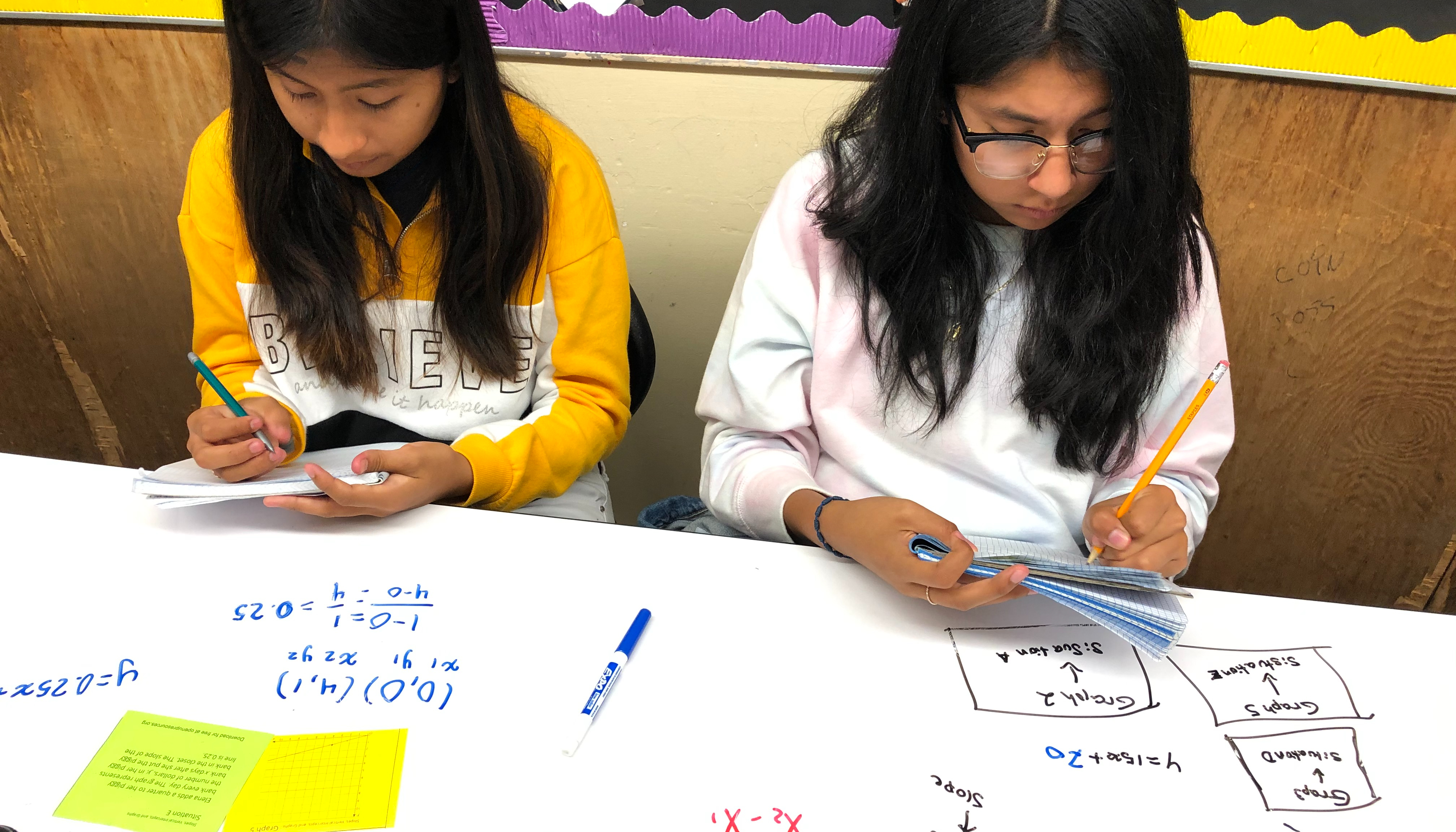
At Middle School 88 our mission is to develop a love of math for your child and prepare them to apply their math skills across content areas.
Art
Encouraged by MS88 administration and teachers, the Arts at MS88 have developed into the benchmark for Middle Schools in the New York Metropolitan area.
Science
Our Science department strives to have teachers develop effective hands-on inquiry that involves a series of steps that builds students’ investigative skills (i.e. observation, questioning, experimental design, data analysis, explanation, and reflection).
Literacy
Reading units have anchor texts, suggested independent reading titles or book club titles at various levels, and teaching points.
Library
Our library builds school culture and student choice by providing diverse material, access to technology and special programming to appeal to students’ interests.
Grants & Partnerships
M.S. 88 is strategically aligned with major universities, along with public and private companies to support teacher development and enrich the learning experiences of our students.
Middle School 88’s Grading & Instructional Philosophy
Excerpt from Middle School 88’s Mission and Vision
The mission of M.S. 88 is to develop the core values students need to develop themselves inward and outward. We provide students with supportive communities and the necessary emotional and academic support so that students can think for themselves, problem solve, and add value to their lives and to the world in which they live.
Promoting equity and excellence for every student.
Social Studies
Our Social Studies curriculum is made up of inquiry-based, in-depth studies of history, geography, economics, government, and culture. Units of study are planned around essential questions of large, enduring concepts. Lessons are presented in the workshop model (including a mini-lesson, independent/group work and share). Students are engaged in active learning through independent inquiry and cooperative group work in order to make the concepts of Social Studies meaningful and real. Students explore inquiries through authentic research and integration of reading, writing, observation, discussion, and debate. They are guided through an examination of multiple perspectives using primary and secondary resources, interviews, and field trips.
Teachers engage and challenge their students by showing the complexities of history in ways that promote critical and creative thinking. We will also adapt several units of study focusing on multicultural awareness and social concerns.
In preparation for the 8th grade state exam, students learn to answer document-based questions (DBQS) in the study of specific Social Studies content. They are also coached in the reading and interpretation of maps, charts, and diagrams.
Music, Fine Arts & Drama
At M.S. 88 we take great joy in supporting the development of our young musicians, singers, actors and artists. We proudly invest in programming designed to activate student interest through meaningful engagement in activities in which they can build confidence, community and a strong sense of personal identity. Programming through the arts both during the school day and after school offers students an opportunity to engage with one another in non-academic settings. Along with many other positive outcomes, this supports the language development of ELL students and is a welcoming space for all students to interact and foster community.
- Music: Rockestra, House Band, the Middle School 88 Chorus, and guitar class with resident rock star and teacher Aaron Tulloch
- Theatre/Drama: drama/theatrical instruction with resident drama teacher Martina Lidondici, biannual dramatic productions with student facilitated set/costume construction, acting and direction (2016 production of Little Shop of Horrors), the Girl Be Heard after school program
- Art: Art Smart fine arts after school program, the biannual Shine the Light community arts festivals, fine arts instruction with resident art teacher Megan Ambrosino
Math
At Middle School 88 our mission is to develop a love of math for your child and prepare them to apply their math skills across content areas.
We build conceptual understanding through project-based learning tasks that allow your child the time to engage in new skills and apply what they know in a real world context.
All students need a high-quality mathematics program designed to prepare them for careers in a technological age. Middle School 88 offers a rigorous and challenging mathematics program for every student. The mathematics program reflects a balance of computational and procedural basic skills, conceptual understanding, and problem-solving aligned with the Common Core Learning Standards.
We use a variety of resources to accomplish this goal. Middle School 88 uses a blend of digital and text content to engage your child. All resources are aligned to the Common Core Standards. Examples of math resources include:
- Connected Math 3
- Learn Zillion
- Wowzers
- Math Coach Books
- Engage NY
- Kahn Academy
- IXL
Art
Encouraged by MS88 administration and teachers, the Arts at MS88 have developed into the benchmark for Middle Schools in the New York Metropolitan area.
By incorporating other areas of study in conjunction with a visual arts curriculum, students analyze and respond to the expressive qualities in other areas of study. This is one method being developed by teams of teachers each working together on multiple projects for each team project. This process encompasses many skills and concepts that directly compliment the comprehensive visual arts education curriculum at MS88, while students gain respect for their own work and the work of others.
Also in conjunction with full-time staff, outside arts organizations and arts professionals work side by side with students in the art-making processes on a variety of classroom and community projects, encouraging the students to understand the role of the visual arts in communicating diverse cultural beliefs and ideas. By the use of art-making processes students communicate ideas, images and themes and develop fluency in visual communication and vocabulary, and by investigating works of art from different times and places, students will develop an understanding that art and culture shape and reflect each other.
Student exhibitions and field trips to New York’s major Art institutions and Museums will aid in the students understanding of visual arts concepts and processes, as well as, providing strategies to analyze the visual qualities and interpret the meanings of works of art and employ critical evaluation skills in creating and exhibiting their works of art.
Over the course of MS88’s Arts curriculum, visual arts students will have the opportunity to develop High School portfolio criteria and learn about the variety of career options open to them. Teachers are encouraged to go beyond the careers traditionally discussed in visual arts instruction and assist students in the exploration of both lesser-known and emerging career fields in the arts.
Science
Our Science department strives to have teachers develop effective hands-on inquiry that involves a series of steps that builds students’ investigative skills (i.e. observation, questioning, experimental design, data analysis, explanation, and reflection).
Teachers will integrate literacy and mathematical skills into the science curriculum. Money has been allocated for the purchase of equipment and materials necessary for the Science labs, including nonfiction materials to improve the Science classroom libraries and more Prentice Hall Science Explorer Series for classroom reference. With the implementation of New York City’s K-8 science core curriculum, teachers will also receive resources and lab kits to support each unit.
In collaboration with the Science teachers, we have created the following goals for this department:
- To provide inquiry-based science instruction in all classrooms in order to promote students’ understanding of intermediate level science content and process skills based on NYS standards.
- To increase test scores of the NYS Intermediate Level Science Test. Eighth-grade teachers will meet with the science coach to improve and develop lesson plans and practice sessions for the ILST. Teachers will also be provided with ILST review books for all students. Students enrolled in the Living Environment Regents course will also have test preparation programs and materials.
- To facilitate 5 periods of science instruction for each class. (The Medical House will have an additional period of science to accommodate the theme).Each unit will include scientific investigations, research, and lab reports. Unit assessments include universal assessments, evidence of the investigative process (science notebook, lab reports, project displays) as well as tests and quizzes.
- To participate in weekly grade planning meetings for unit and lesson planning based on NYS learning standards, developing and sharing inquiry-based activities, creating unit assessments and analyzing data to differentiate instruction.
- To acclimate the sixth-grade teachers to the new sixth-grade curriculum and related materials. Seventh and eighth-grade core curriculum will be implemented.
- To provide extensive hands-on experiences with scientific equipment and materials. The department will purchase appropriate materials and equipment each year, inventory lab room quarterly and communicate with the administration for needed equipment and materials.
- To improve the nonfiction reading and writing skills of all students. Teachers will incorporate the same nonfiction reading and writing strategies as literacy teachers into their science lessons to help support scientific reading and writing spanning from research, lab reports, current events, and exit projects.
- To integrate science exit project in grades 6, 7 and 8. Science Coach will help organize the project on each grade, have weekly meetings to develop a timeline and lessons to implement the project within the curriculum and develop an exit project binder with templates and rubrics for each grade.
- To invite environmental organizations, especially those who are already involved in the Integrated Inquiry Curriculum, to provide additional fieldwork experience for students.
- To continue student participation in the Junior Fellows Program at the NY Academy of Medicine and Maimonides Hospital to encourage the pursuit of medical and scientific careers, as well as reinforcement of the scientific inquiry process.
Literacy
Reading units have anchor texts, suggested independent reading titles or book club titles at various levels, and teaching points.
Texts meet the needs of our highest level readers and readers who read below grade level, based on what assessments and teacher conferencing in the classroom.
Readers take assessments four times a year first for a baseline and then to monitor their progress in engaging with and understanding more complex texts.
Writing units incorporate research in three ways – research of lived experience, primary research through investigation (interviews, surveys, experiments), and research from texts.
All the units are text-based either through teaching close-reading of mentor texts, or through text-based research.
Teachers use conferencing to support students push towards and beyond their writing goals to becoming flexible, resilient writers.
Pacing calendar for grades 6-8
Sixth Grade
Sept Reading: Turning Every Kid into a Reader – ReallyWriting Personal Narrative: Creating Powerful Life Stories*
Oct Reading: Analyzing Characters Across Series*Writing: Persuasive Essays
Nov–Dec Reading: Investigating Social Issues in Text Set ClubsWriting: The Literary Essay: From Character to Compare/Contrast*
Jan–Feb Reading: Nonfiction Research Across Text SetsWriting: Research-Based Information Writing: Books, Websites, and Presentations*
March Reading: Lifting the Level of Reading through Strong PartnershipsWriting: Literary Analysis: Quick Lit Essays and Fan Fiction Scenes
April–May Reading: Critical Literacies: Reading for Perspective and Power across Genres*Writing: The Sounds, Images, and Ideas of Poetry*
May–June Reading: Reading to Learn: Synthesizing Nonfiction*Writing: Raising the Level of Reading Notebooks
Seventh Grade
Sept-Oct Reading: Agency and Independence: Launching Reading Workshop w/Experienced ReadersWriting: Writing Realistic Fiction: Symbolism, Syntax and Truth*
Oct-Dec Reading: Reading as a WriterWriting: Writing about Reading: From Reader’s Notebooks to Companion Books*
Jan-Feb Reading: Nonfiction Research Across Text Sets*Writing: The Art of Argument: Research-Based Essays*
March Reading: Lifting the Level of Reading through Strong PartnershipsWriting: Literary Analysis: Quick Lit Essays and Fan Fiction Scenes
April-May Reading: How to Eat a PoemWriting: Poetry: Immersion and Innovation*
May–June Reading: Developing Analytical Reading Practices across Genres*Writing: Memoir
Eighth Grade
Sept-Oct Reading: Textual Lineages and Courses of StudyWriting: Investigative Journalism*
Oct Reading: Fantasy & Dystopia*Writing: The Literary Essay: Analyzing Craft and Theme*
Nov-Dec Reading: Critical Nonfiction Reading Across Texts*Writing: Position Papers: Research and Argument*
Jan – Feb Reading: Analyzing PoetryWriting: Poetry: Immersion and Innovation*
Feb- March Reading: Reading Analytically across Genres: Recognizing Archetypes and Allusions*Writing: Literary Analysis: Quick Lit Essays and Fan Fiction Scenes*
April – May Reading: Reading for High School*Writing: Fantasy: Writing within Literary Traditions
Web links
Library
Our library builds school culture and student choice by providing diverse material, access to technology and special programming to appeal to students’ interests.
How the Library supports our reading culture:
- Library Lunch (projects, clubs, homework, computers, etc.)
- Building a library collection that reflects our student body and interests
- Connecting Nonfiction to Fiction through collection development and displays
- Library Open Access Periods (flexibility for teachers and students)
- Current Events Displays
- Student-led book clubs
Media Literacy Classes:
- Current Events (We don’t like the idea of fake news so we teach Information Literacy!)
- Learning how to analyze and create media
- Project-based learning based on interest (Mutt-i-grees Challenge Websites)
- Afterschool Computer Club (Coding and open programs like Minecraft allow them to explore their interests)
Social Emotional Learning:
- All students can be brought into the fold with building-wide programs and lots of choice!
- Principal’s Council meetings give our student leaders the ability to have a dialogue with our staff and make important decisions for the student body.
Grants & Partnerships
M.S. 88 is strategically aligned with major universities, along with public and private companies to support teacher development and enrich the learning experiences of our students.
TOSHIBA AMERICA FOUNDATION
Toshiba America Foundation contributes to science & math education by investing in teacher designed projects for 6-12 students. In 2015 we received $5,000 for the purchase of a littleBits pro-library for the FabLab.
THE LOWE’S CHARITABLE AND EDUCATIONAL FOUNDATION
The foundation’s primary philanthropic focus centers on K–12 public education and community improvement. Within these areas, Lowe’s Foundation is committed to supporting projects that have the greatest impact on our communities and align with our core business — home improvement. In 2015, we were awarded a $25,000 Lowe’s Toolbox for Education Grant for the creation of the Fab Lab which houses the STEM program in the Medical House.
LUTHERAN MEDICAL HOUSE
In-house medical and dental care are provided for our students.
LEGO ROBOTICS
Students participate and compete in various events using this technology based program.
DISCOVERY EDUCATION
JETBLUE FOUNDATION
JetBlue has made a commitment to encourage STEM education to traditionally underserved youth by offering opportunities to students for STEM studies. In 2015 we were awarded $25,000 by the JetBlue foundation for the creation of the Fab Lab which houses the STEM program in the Medical House.
C.H.A.M.P.S ATHLETIC PROGRAM
C.H.A.M.P.S. provides fun and exciting after-school athletic programs for our students.
PEER MEDIATION
Students & staff are trained in peer mediation and conflict resolution. Please refer to the planner insert for further information on our advisory program.
THEATRE FOR A NEW AUDIENCE
Theatre for a New Audience helps provide lesson plans for our teachers to support students in creative writing and acting.
THE NEW YORK ACADEMY OF MEDICINE JUNIOR FELLOWS.
Scholars will gain an in-depth view of the lives and careers of medical professionals.
TEACH FOR AMERICA
Ms. Mitchell’s long-standing relationship with teacher recruitment at Teach for America and Lauren Kraus is about serving as mentors for new teachers and creating human resource pools for a growing school. We train, recruit, hire, and support novice teachers.
NEW YORK TEACHING FELLOWS
M.S. 88 is partnered with the NYC Teaching Fellows as a novice teacher training site. We host of cohort of Fellows each year through the Spring Classroom Apprenticeship, pairing them with strong content area teachers and involving them in all aspects of teaching including collaboration with colleagues through teacher team meetings.
COLUMBIA UNIVERSITY
Our Integrated Project Week (IPW), which sprung out of our long-standing partnership with CERC, is still going strong in its sixth year.
Over the years, our teachers have received extensive professional development through the Learning through Ecology and Environmental Field Studies (LEEFS) and Technology, Research, and Ecology Exchange with Students (TREES), which then positively impacts student-centered, project-based curriculum and instruction design.
The Earth Institute at Columbia University is currently working with two teacher teams to develop an integrated curriculum map aligned to the Common Core Learning Standards, the Next Generation Science Standards, and the sustainability education standards.We have raised the bar for IPW by incorporating the Citywide Instructional Expectations units of study aligned to the Common Core Learning Standards and including science and social studies throughout all of our hands-on, inquiry-based projects.
Our ongoing green wall, green roof, and brand-new oyster bed farming projects all came out of IPW, and you can bet that the students at Middle School 88 are getting an education that reaches far beyond the walls of the traditional classroom!
BROOKLYN COLLEGE
Brooklyn College sees Middle School 88 as the Institute for Research on Learning. Both the school and university will engage in best practices for undergraduate and graduate teacher training.
CHILDREN’S ENVIRONMENTAL LITERACY FOUNDATION
Children’s Environmental Literacy Foundation (CELF) founder and executive director Katie Ginsberg has been working with faculty on embedding the national sustainability standards into the curriculum, namely by “helping students to identify important questions that recur throughout all our lives. They are broad in scope and timeless by nature. The essential questions should help students effectively inquire and make sense of important but complicated ideas, knowledge, and know-how.”
MIDDLE SCHOOL QUALITY INITIATIVE
Middle School Quality Initiative (MSQI) came out of the City Middle School Task Force to address the low number of middle school students reading on grade level. MSQI is in line with the instruction at M.S. 88 that uses formative assessments, teacher teams, strategic tutoring, and rigorous instruction to move struggling readers.
MILLIONTREES NYC
This fall saw a courtyard tree-planting event held in conjunction with One Million Trees. Students gained in-depth understanding of what it means to be truly sustainable, and they planted eight saplings for which they will care.